
If you have ever seen a piece of writing in Irish (Gaeilge) and thought it looks completely different from English or other European languages, you are not alone. Irish has a unique aesthetic and a distinct linguistic structure that makes it both fascinating and intimidating to look at.
Here is a brief insight to what makes written Irish visually and structurally unique.
The Missing Letters
One of the first things people notice about written Irish is what is not there. The traditional Irish alphabet only has 18 letters.
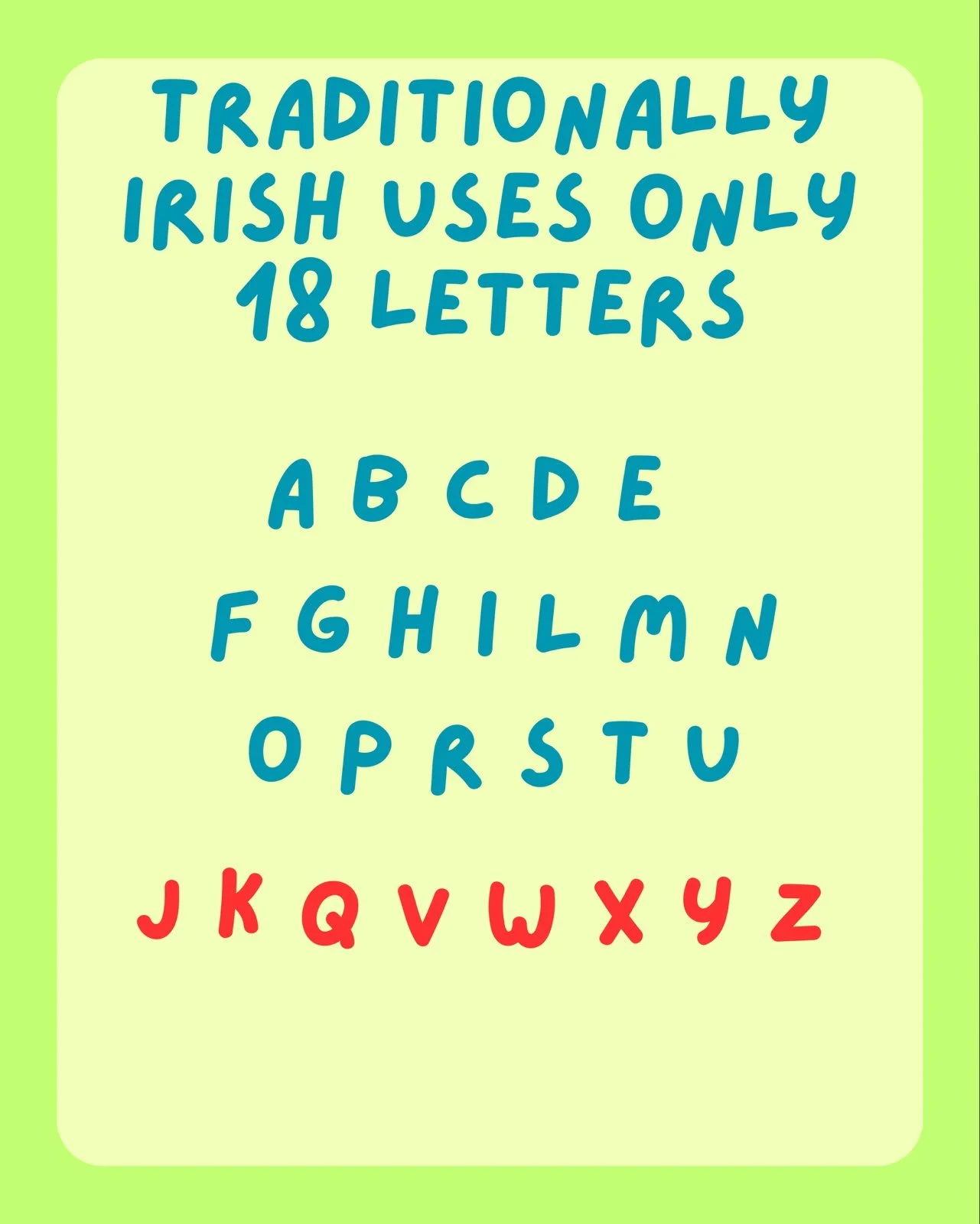
Letters you won't find in traditional Irish words are J, K, Q, V, W, X, Y, and Z.
Although some modern loanwords do use these letters:
Júró for euro
Kilocaloraithe for kilocalories
Quinín for quinine
Vóta for vote
Yóyó for…..yo-yo
Zú for zoo
W, X are still mostly waiting for their day…
However, traditional Irish relies on the smaller subset that produces a distinct visual rhythm which heavily features vowels and consonants combinations like bh, ch, mh, and dh.
Broad and Slender Consonants
Irish spelling is governed by a strict rule known in Irish as Caol le caol agus leathan le leathan ("Slender with slender, and broad with broad").
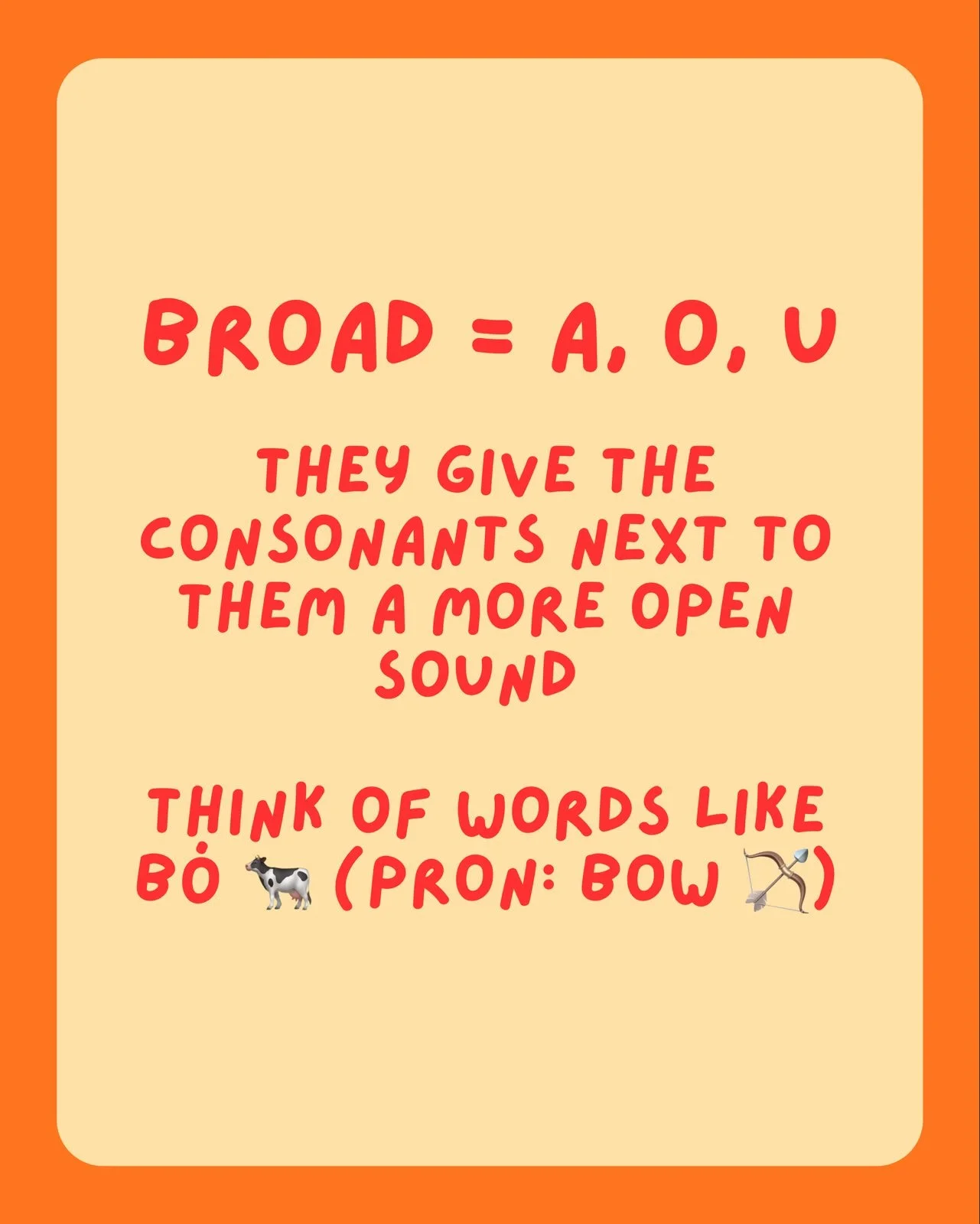
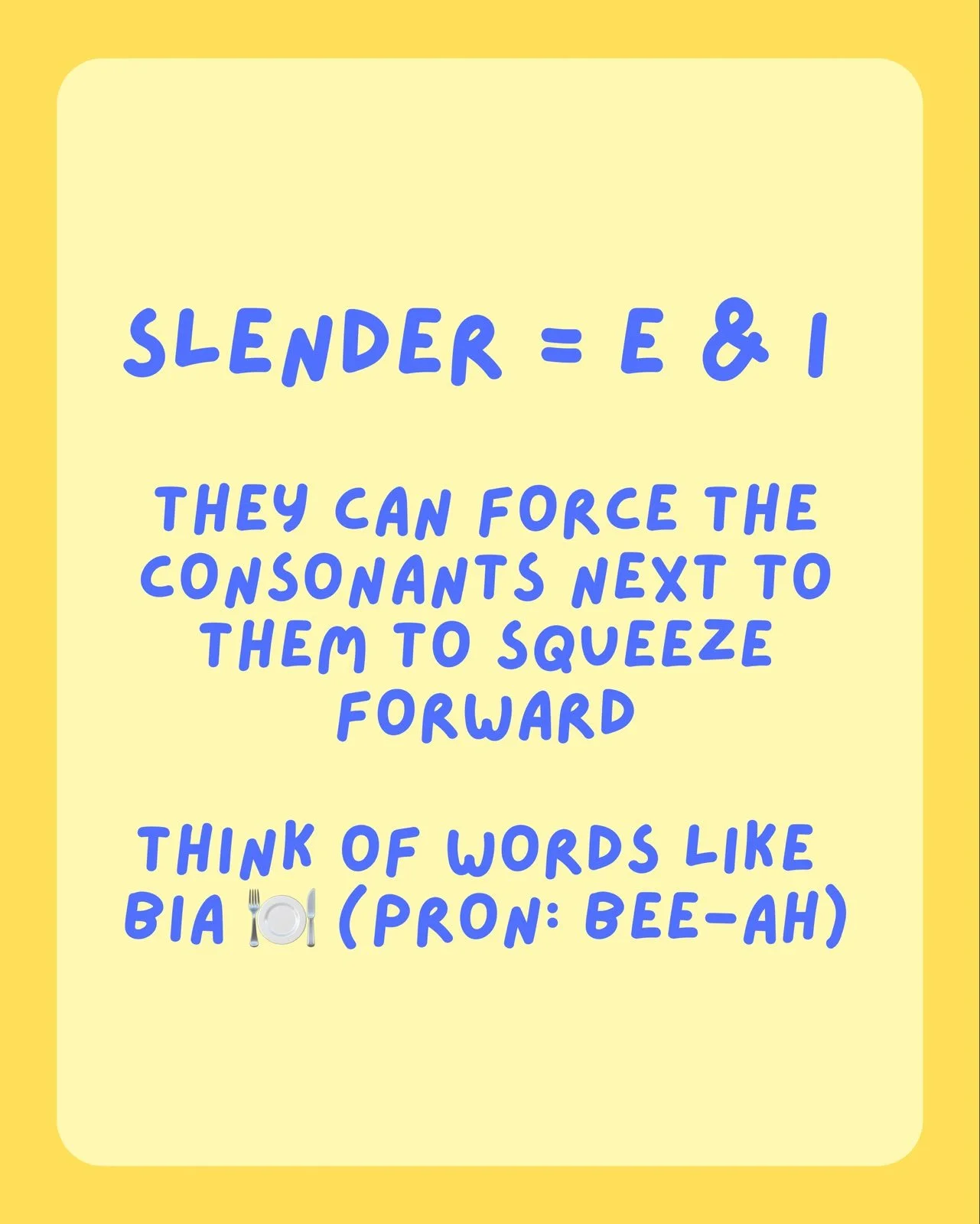
Consonants are sandwiched between matching vowel types, which can look like a typo, but the extra vowels tell you exactly how to pronounce the consonant next to them.
Vowels are split into broad (a, o, u)
and slender (e & i)
The Fada (The Accent That Changes Everything)
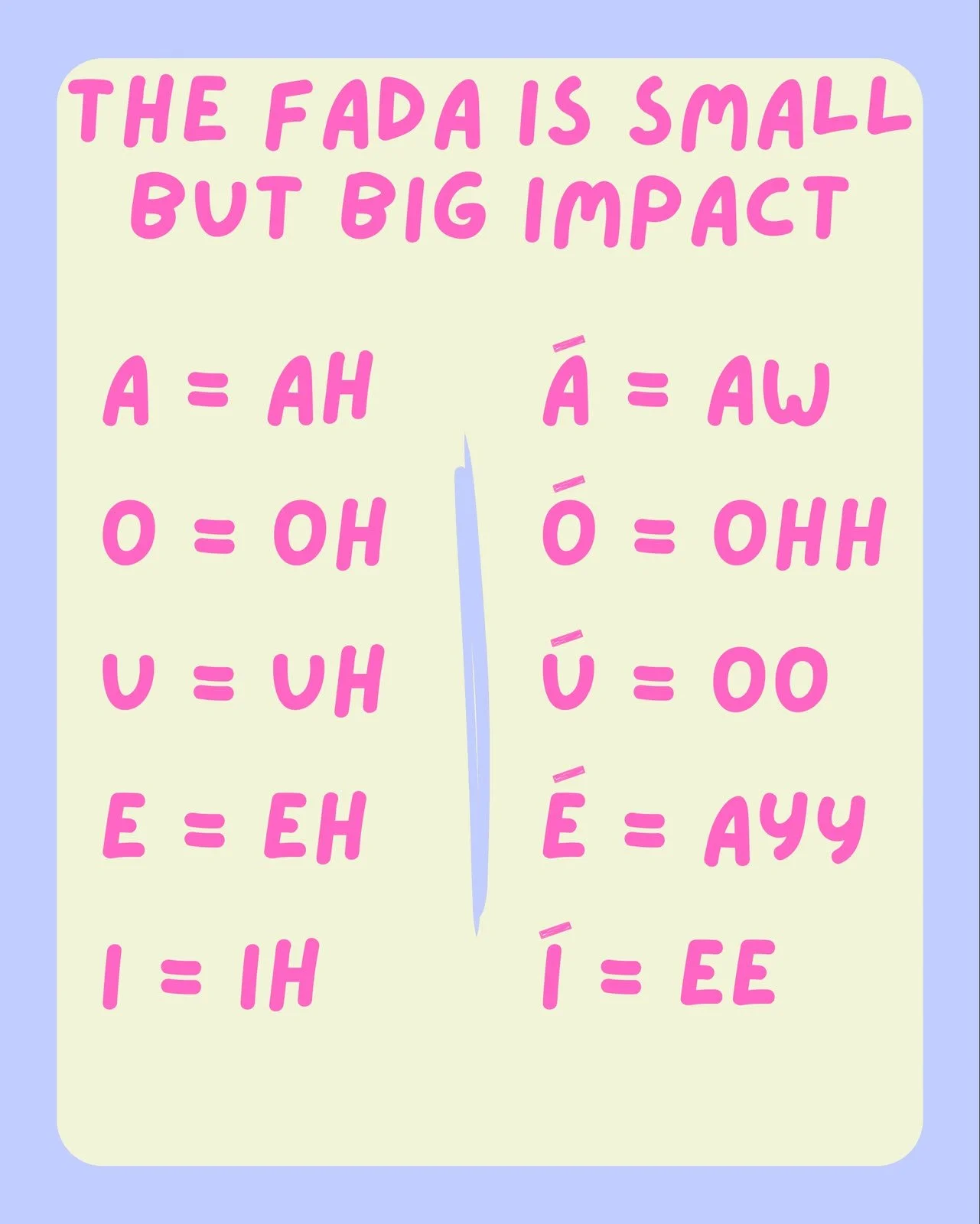
If you look closely at Irish text, you will see a slanted line over certain vowels (á, é, í, ó, ú).
This is called a fada (meaning "long" in Irish).
The fada does an important job, completely changing both the pronunciation and meaning of a word, e.g. cáca 🍰 (pronounced: kaw-kah) versus caca 💩 (pronounced: kak-ah)….so a missing fada could prove quite dangerous!
Words That Look Nothing Like They Sound
Relying on a familiar alphabet, just with fewer letters, gives written Irish a very distinct visual rhythm. However, heavy combinations like bh, ch, mh, and dh can make pronunciation confusing (shout out to all the Siobháns and Meadhbhs out there) and intimidating for beginners!
Carry Gaeilge Into Everyday Life
At SLÁN, we believe language deserves to be seen as well as spoken.
That’s why we create modern Irish clothing and accessories inspired by Gaeilge, Irish culture and heritage. Our designs aren’t souvenirs or novelty slogans. They’re thoughtful pieces that celebrate meaningful Irish words and phrases through clean, timeless design.
Whether you’re fluent, learning your cúpla focal, or simply proud of your Irish roots, our collection is designed to help you carry a connection to Ireland wherever you are in the world.
Celebrate the Irish Language with SLÁN
The Irish language has survived centuries of change because people chose to protect it, speak it and pass it on.
Today, a new generation is writing the next chapter.
If you’re looking for a meaningful way to celebrate Gaeilge, explore our collection of Irish language clothing, Irish T-shirts, tote bags, hats and accessories, all inspired by the words and stories that continue to shape Ireland.
Shop the SLÁN collection today and wear your connection to the Irish language with pride.
